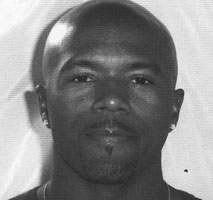
 If you want to get Courtney Hawkins started, just bring up the issue of specialization in high school sports.
All too often, kids are being told they need to focus on one sport to have a chance of playing at the college or professional level.
It’s particularly prevalent in Flint, where many youngsters are steered toward year-round basketball.
Hawkins hates what he sees.
“You only get one opportunity to play high school sports,” Hawkins said. “You get four chances to play football, four chances to play basketball, track, baseball, whatever.”
“A lot of these so-called ‘coaches’ – I’m not talking everybody – but the ones who sit up and tell a kid, ‘You’re a basketball player,’they’re doing that kid an injustice.”
Hawkins knows of what he speaks. He was the ultimate multi-sport athlete in the 1980s at Beecher, making All-State in football, basketball, and track. He was an integral part of six state championship teams in basketball and track and a football team that made the state playoffs in 1985 back when qualifying was tougher.
Yet, juggling three sports didn’t keep him from making it to the top in one. After a record-setting career at Michigan State, he played nine years in the National Football League with Tampa Bay and Pittsburgh. He credits all of his experiences competing in whatever sport was in season with making him the football player he became.
“Most college coaches would rather have a well-rounded athlete than a guy who just plays football or basketball,” Hawkins said. “For instance, Coach (Tom) Izzo said he loves a guy who’s played football, because he knows he’ll be tough and won’t shy away from contact. Each sport kind of brings out different things.” Hold on. He’s not through.
“There are exceptions to the rule,” Hawkins added, “but there aren’t many Kobe Bryants or LeBron James walking around Flint. These kids are being misled by some people. I don’t know if they’re doing it for their own gain or what, but they need to tell our kids to do as much as they can, get as much exposure as they can. Who knows? You may be a basketball player, but you may be the next Jerry Rice or Walter Payton. You won’t know unless you give it a chance.”
In football, Hawkins ran 378 times for 3,202 yards and 63 touchdowns, averaging an incredible 8.5 yards per carry. He had 4,569 yards in total offense.
In basketball, Hawkins was a two time All-Stater who set a school record by averaging 7.7 assists per game in 1987-88. He was the starting point guard on the 1984-85 and 1986-87 state Class B championship teams.
Beecher was the state Class B track champion all four years that Hawkins competed. Hawkins ran on four state championship relay teams during his career. “It kept me in shape all year long,” Hawkins said. “It kept me out of the streets. My mom knew where I was.” Hawkins’ versatility as an athlete was evident on the football field during his days at Beecher.
He made the varsity in 1984 as the starting quarterback, then moved to running back the following season. He was a two-way All-Big Nine Conference pick as a running back and defensive back, but was switched to wide receiver by coach George Perles when he arrived at Michigan State. Hawkins broke out as a sophomore in 1989 with a school-record 60 catches for 1,080 yards, earning a spot on the All-Big Ten Conference first team. He was the MVP of the John Hancock Bowl in 1990, making six catches for 106 yards in a 17-16 victory over USC.
Hawkins had 138 catches for 2,210 yards at MSU, then grabbed 366 passes for 4,573 yards and 18 touchdowns in 129 NFL games for Tampa Bay from 1992-96, then for Pittsburgh from 1997-2000. Hawkins has played for some of the biggest names in the coaching profession – Perles, Tony Dungy and Bill Cowher – but holds a special place in his heart for Mose Lacy, the stern basketball coach at Beecher. When Hawkins was named Beecher’s football coach this year, one of his first moves was bringing back Lacy to coach the Buccaneers’ linemen.
“He’s a special man,” Hawkins said. “He took so many of us boys from the Beecher area and took us in as if we were his own. He molded us into young men, into gentlemen, to be respectful but to also be tough. “When you look at Beecher, when he left is when the demise started. He held kids accountable.” Hawkins is attempting to bring Beecher back to prominence as football coach and athletic director. He returned to the Flint area three years ago and thought it was time to return to where it all started.
“We’ve got a lot of kids walking these halls that don’t play any sports,” Hawkins said. “I don’t understand it.” We ought to push the kids back onto the court and back onto the field. That way, we’ll get them off the streets. “I tell these boys every single day, ‘There’s no love on those streets.’ You may be fooled that there’s something special on those streets, but the streets are dangerous and have taken away so much from the city of Flint.”‘
READ FULL BIO